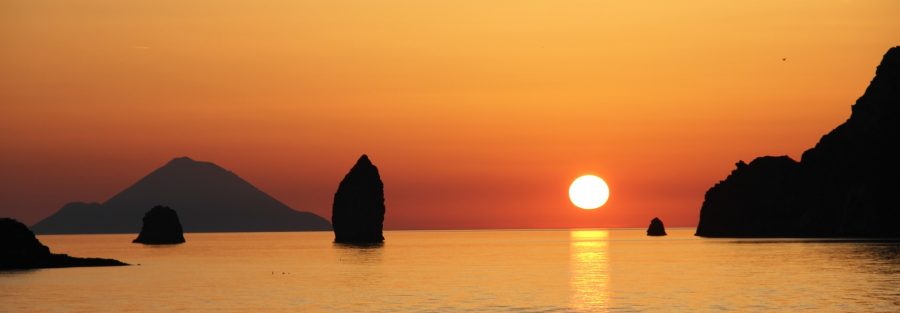
The seven beautiful sisters that dot the blue of the sea facing the northeastern coast of Sicily are rugged and wild volcanic in nature. The myth wants them to be the home of the god of the wind, Aeolus, and perhaps also the temporary landing place of the hero Ulysses who, in addition to the god, taking refuge in the island surrounded by bronze walls (probably Lipari), also meets the monstrous Polyphemus and his companions legendary smiths employed by the god of fire from which the island Vulcano takes its name.
The Aeolian Islands were submarine volcanoes that emerged from the waters about 700,000 years ago in the following order: Panarea, Filicudi, Alicudi, Salina, Lipari, Vulcano and lastly Stromboli which is perhaps about 40,000 years old. The last emergence was that of Vulcanello (peninsula of the island of Vulcano) which took place in 183 BC, while the last pumice and obsidian flows on Mount Pelato in Lipari occurred about 1500 years ago.